# Choosing a template (https://docs.hireway.dev/docs/design/choosing-a-template)
A template decides the layout of your resume: where the header sits, whether there is a sidebar, and how headings and entries look. You can switch templates at any time. Your content, fonts and colors stay the same.
## Open the template gallery [#open-the-template-gallery]
From **Documents**, open the resume you want to change.
Select **Design** at the top of the editor, or press 2 while you are not typing in a field.
**Template** is the first group in the Design panel. Use the row of links at the top of the panel (**Template**,
**Type**, **Color**, **Page**, **Advanced**) to jump between groups.
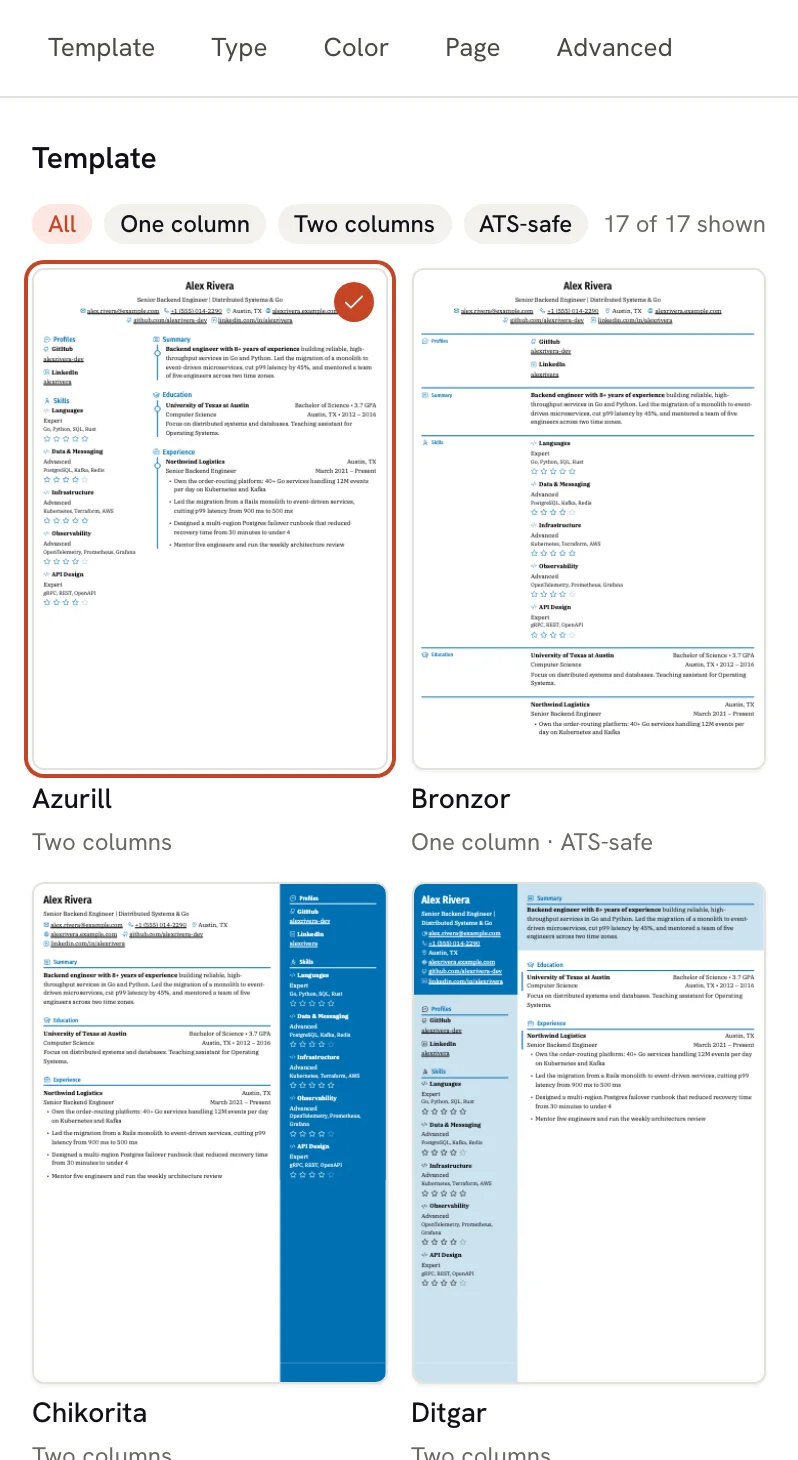 Each thumbnail shows the first page of **your** resume in that template, so you can judge it with your real content. While the thumbnails are being drawn, you briefly see a sample image instead.
## Filter the gallery [#filter-the-gallery]
The chips above the thumbnails narrow the list:
| Filter | Shows |
| --------------- | -------------------------------------------------------------------------------------------------------- |
| **All** | All 17 templates. |
| **One column** | Templates that read top to bottom in a single column. |
| **Two columns** | Templates with a separate sidebar column. |
| **ATS-safe** | Templates with one reading order and plain text headings, which applicant tracking systems read cleanly. |
The counter on the right (for example "7 of 17 shown") tells you how many templates match.
## Preview and apply a template [#preview-and-apply-a-template]
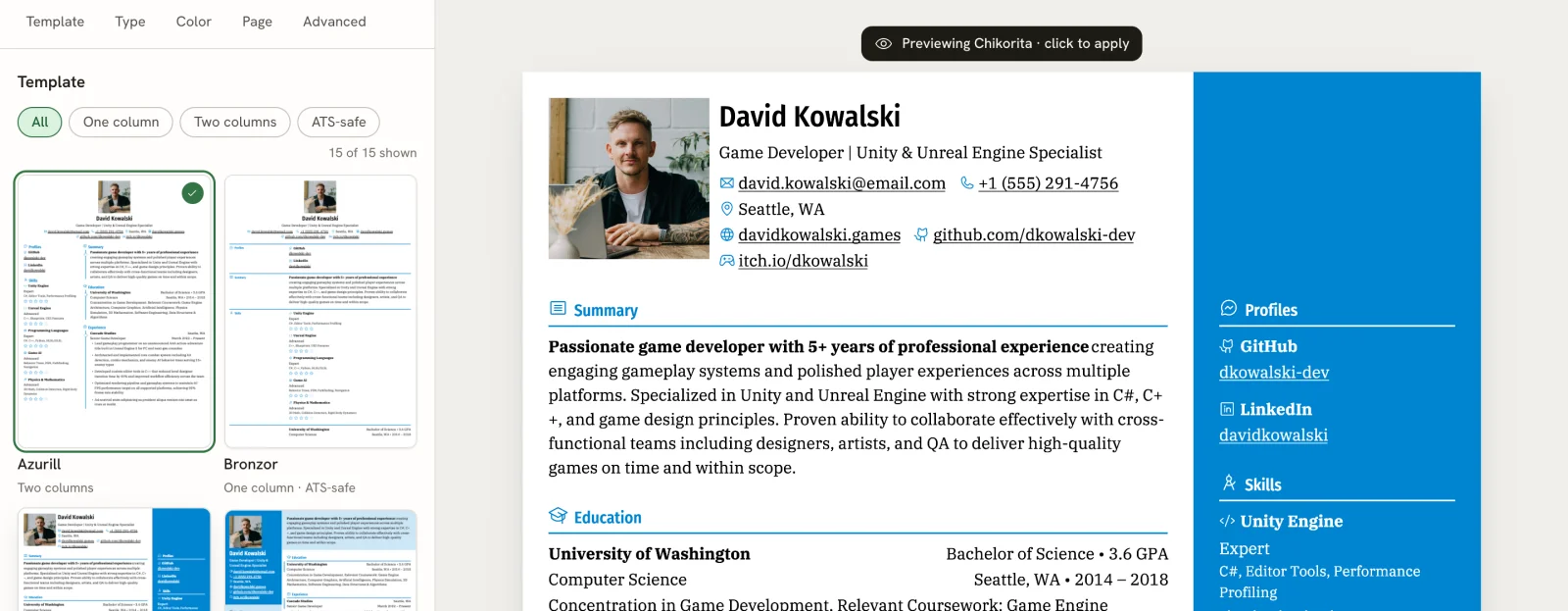
Hover over a thumbnail, or move to it with Tab. The page on the right redraws in that template, and a
label above it reads "Previewing *name* · click to apply". Nothing is saved yet.
Click the thumbnail. The template is applied and a message confirms the change, with an **Undo** button if you
change your mind.
Move the pointer away from the thumbnails, or press Esc, to return to your current template.
Each thumbnail shows the first page of **your** resume in that template, so you can judge it with your real content. While the thumbnails are being drawn, you briefly see a sample image instead.
## Filter the gallery [#filter-the-gallery]
The chips above the thumbnails narrow the list:
| Filter | Shows |
| --------------- | -------------------------------------------------------------------------------------------------------- |
| **All** | All 17 templates. |
| **One column** | Templates that read top to bottom in a single column. |
| **Two columns** | Templates with a separate sidebar column. |
| **ATS-safe** | Templates with one reading order and plain text headings, which applicant tracking systems read cleanly. |
The counter on the right (for example "7 of 17 shown") tells you how many templates match.
## Preview and apply a template [#preview-and-apply-a-template]
Hover over a thumbnail, or move to it with Tab. The page on the right redraws in that template, and a
label above it reads "Previewing *name* · click to apply". Nothing is saved yet.
Click the thumbnail. The template is applied and a message confirms the change, with an **Undo** button if you
change your mind.
Move the pointer away from the thumbnails, or press Esc, to return to your current template.
 On a phone or tablet, press and hold a thumbnail to preview it, then tap it to apply it. On phones, Design opens as a
sheet over the lower half of the page and the templates scroll sideways in a strip.
## The 17 templates [#the-17-templates]
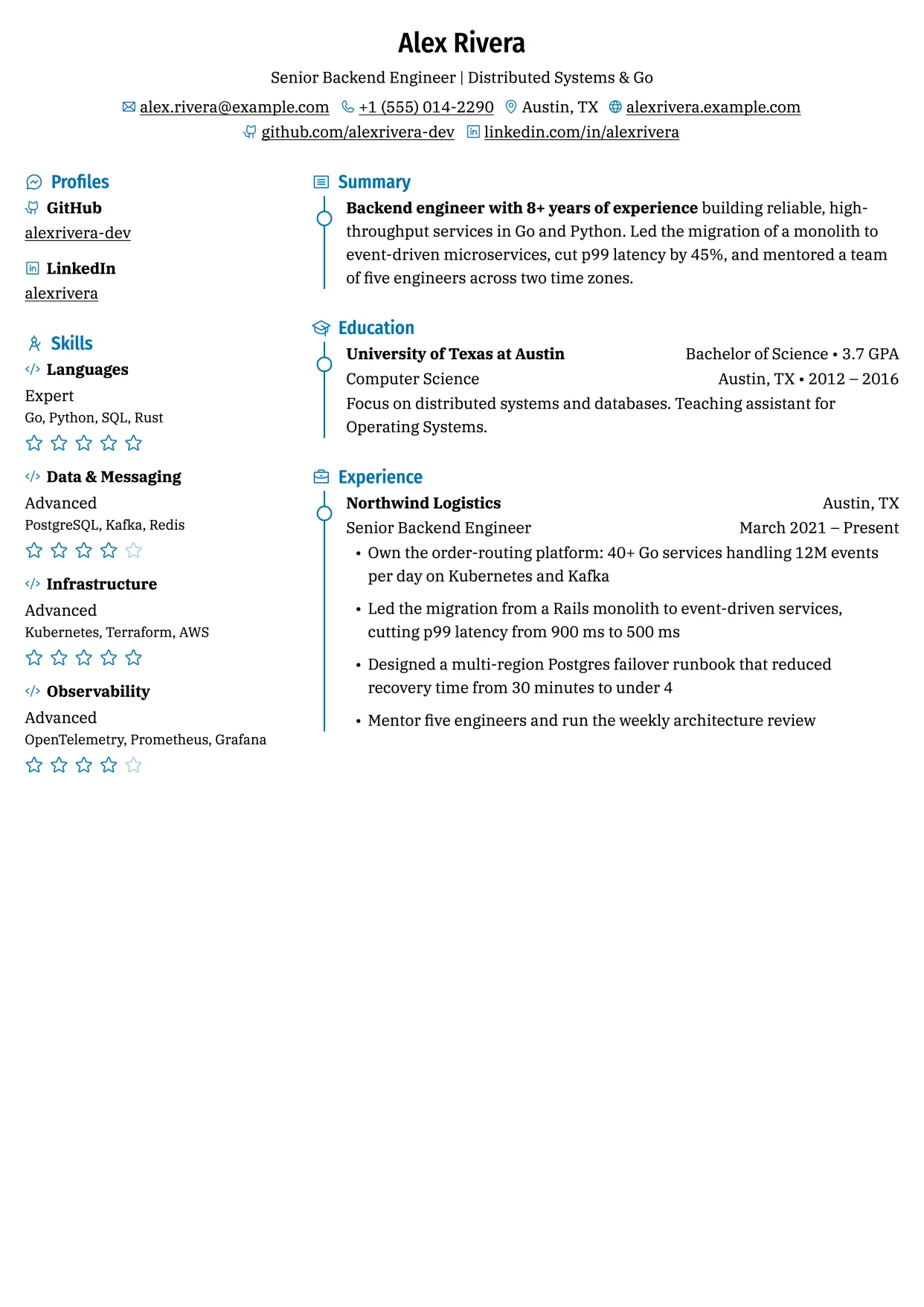
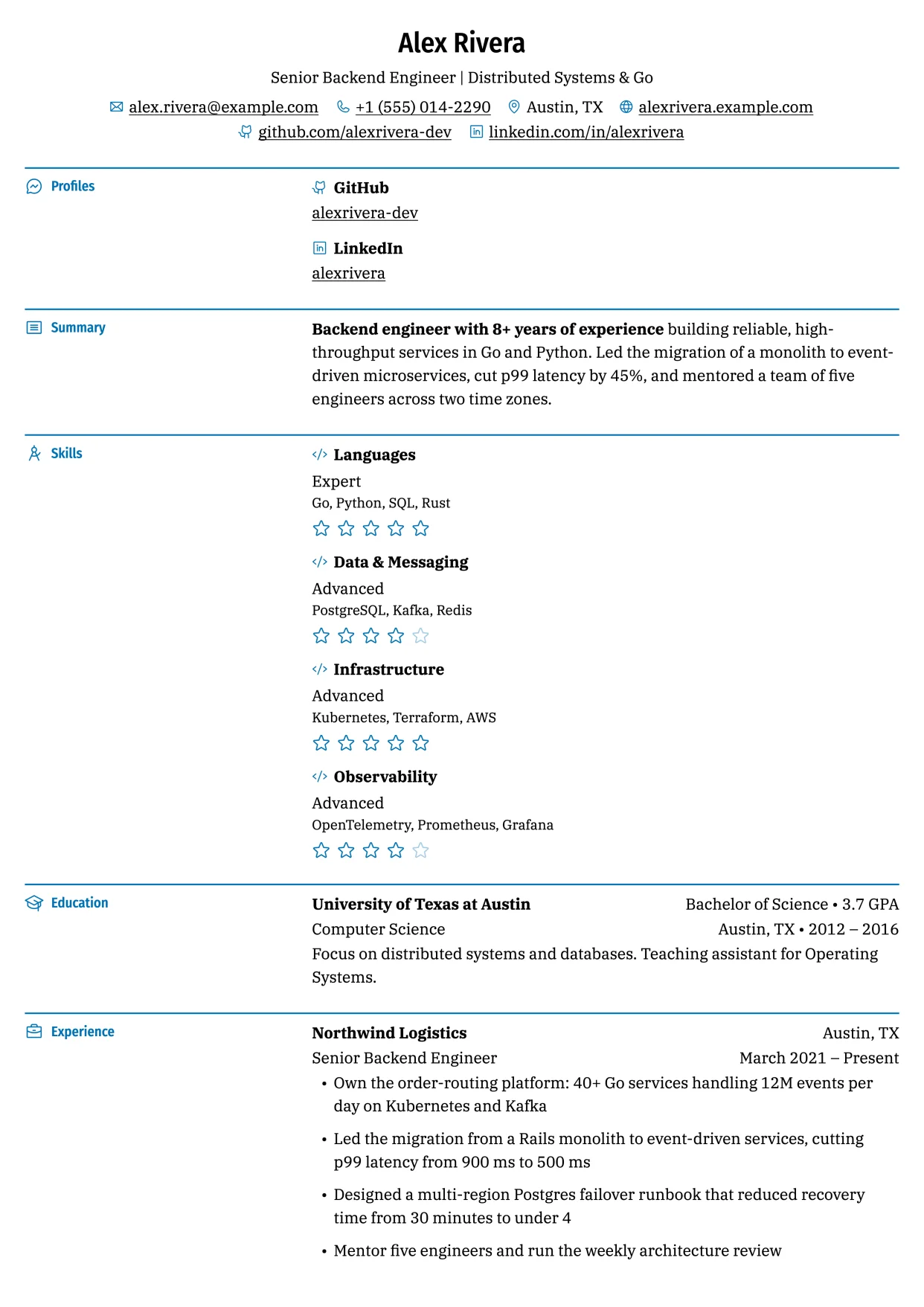
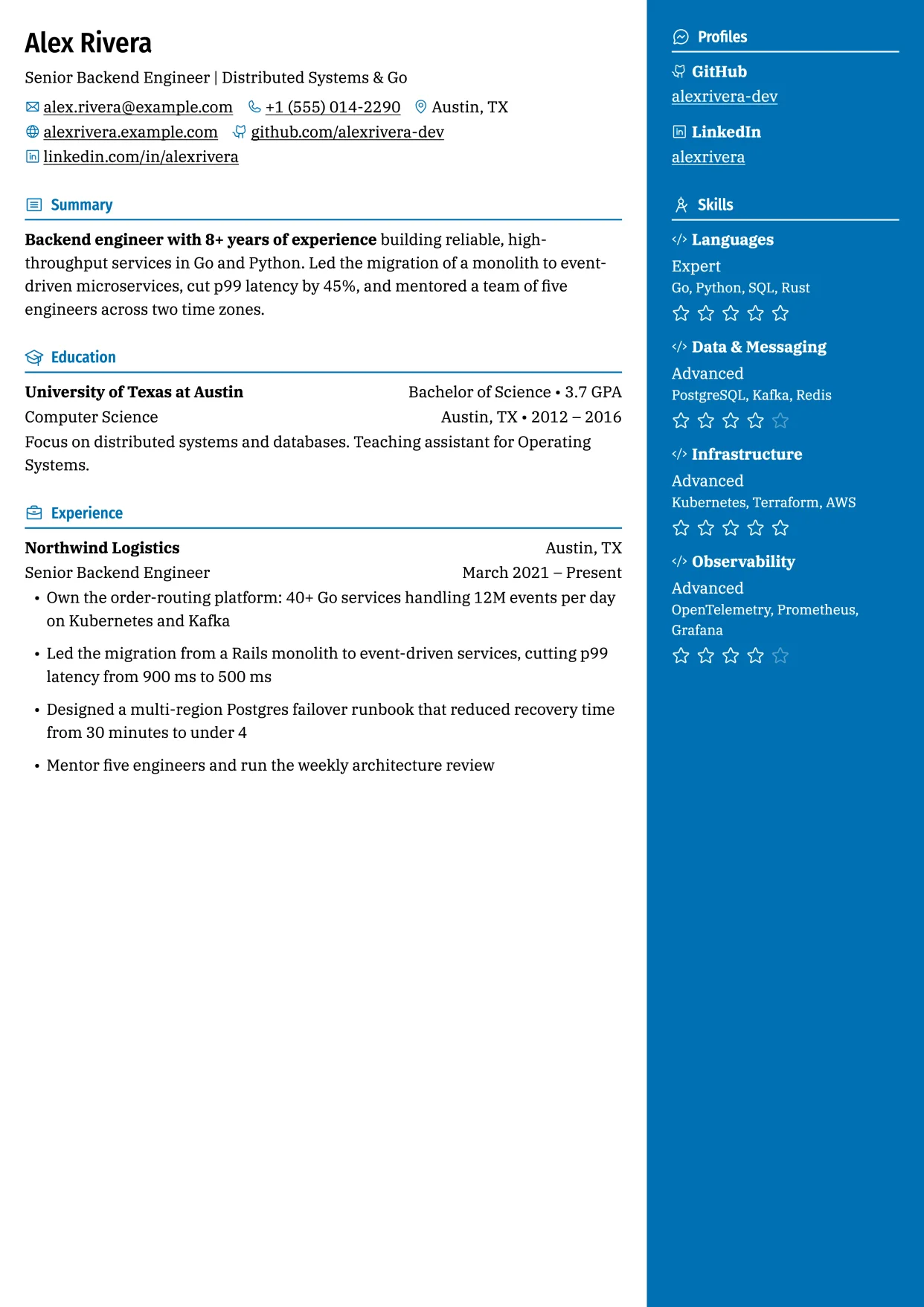
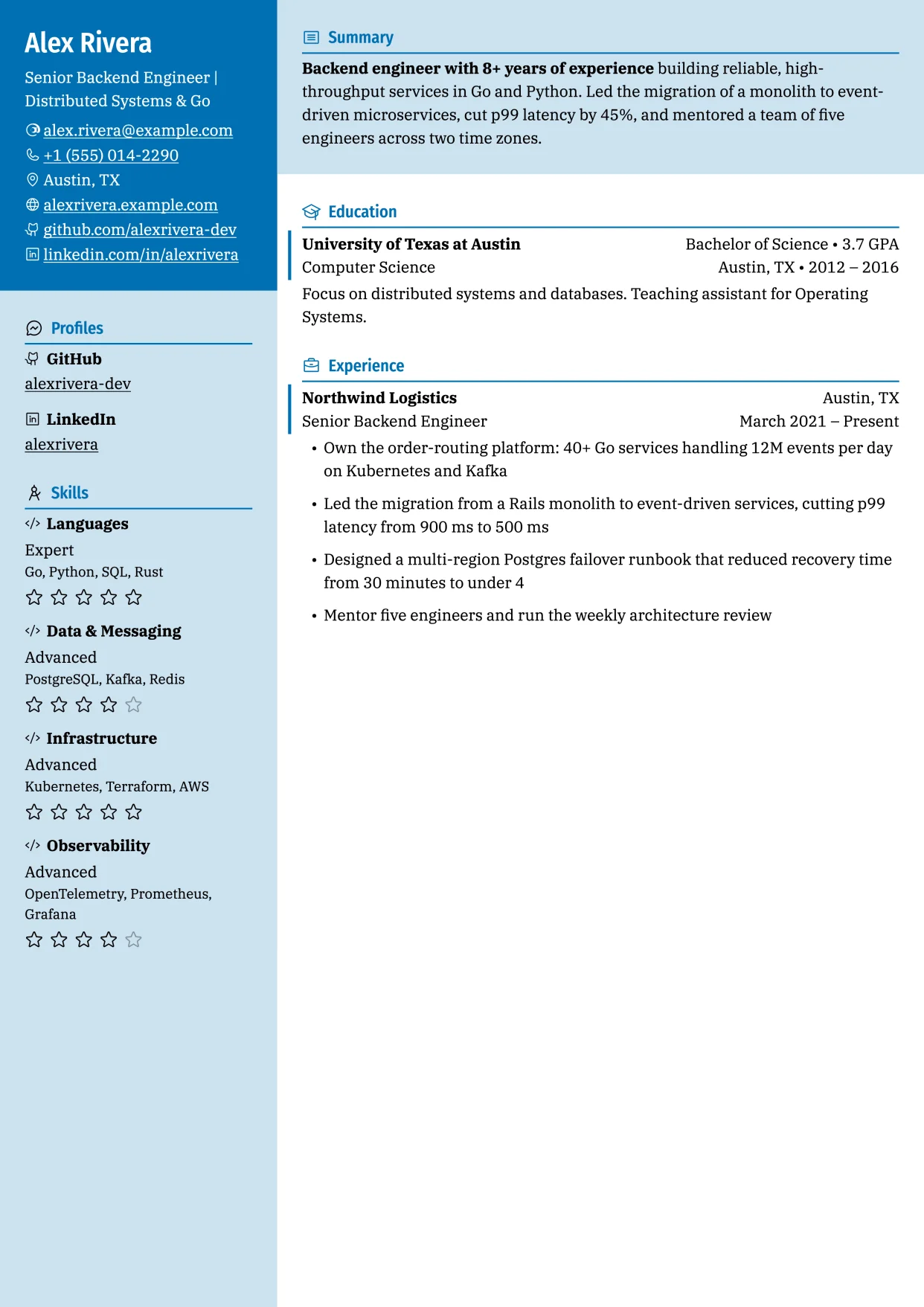
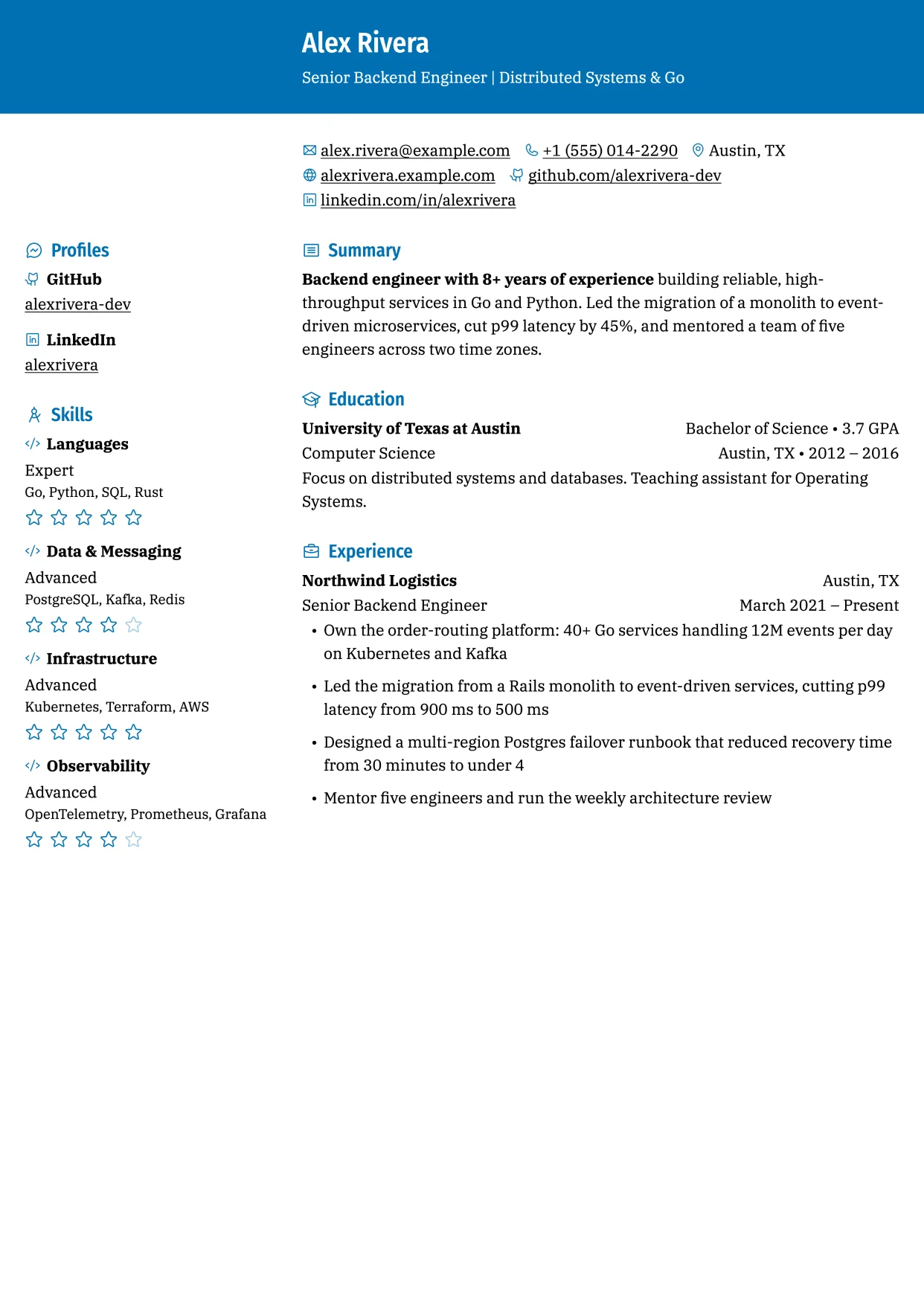
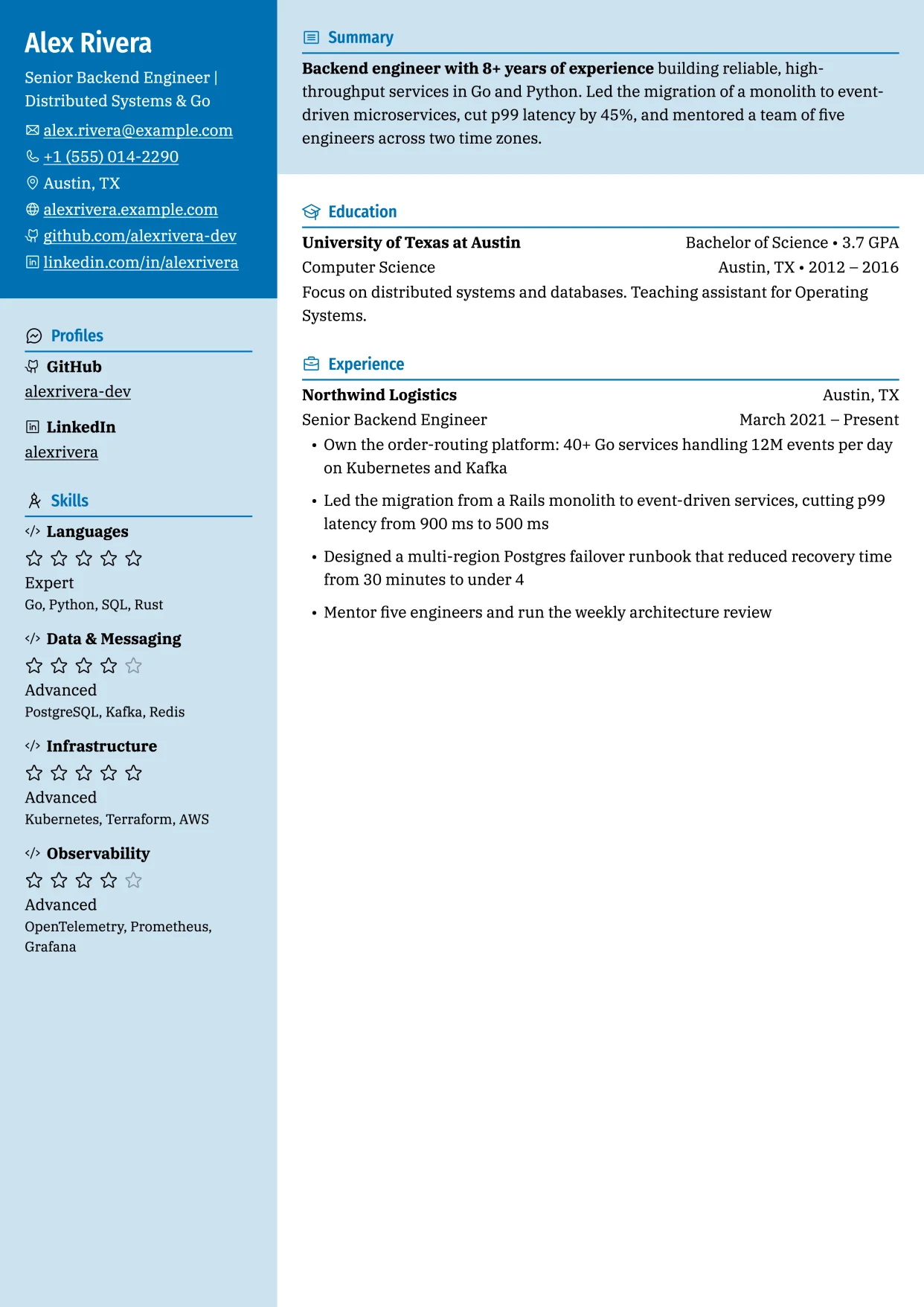
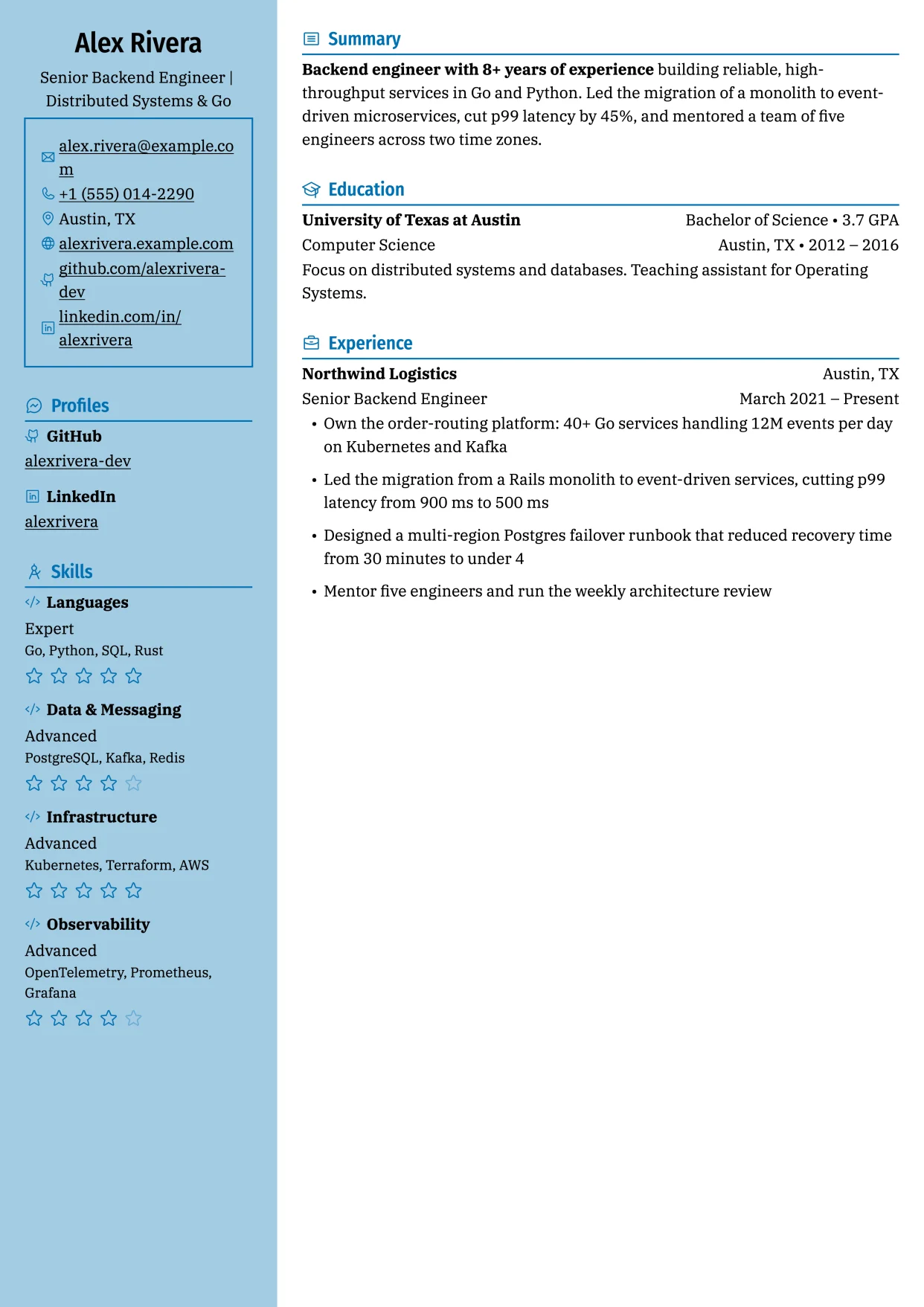
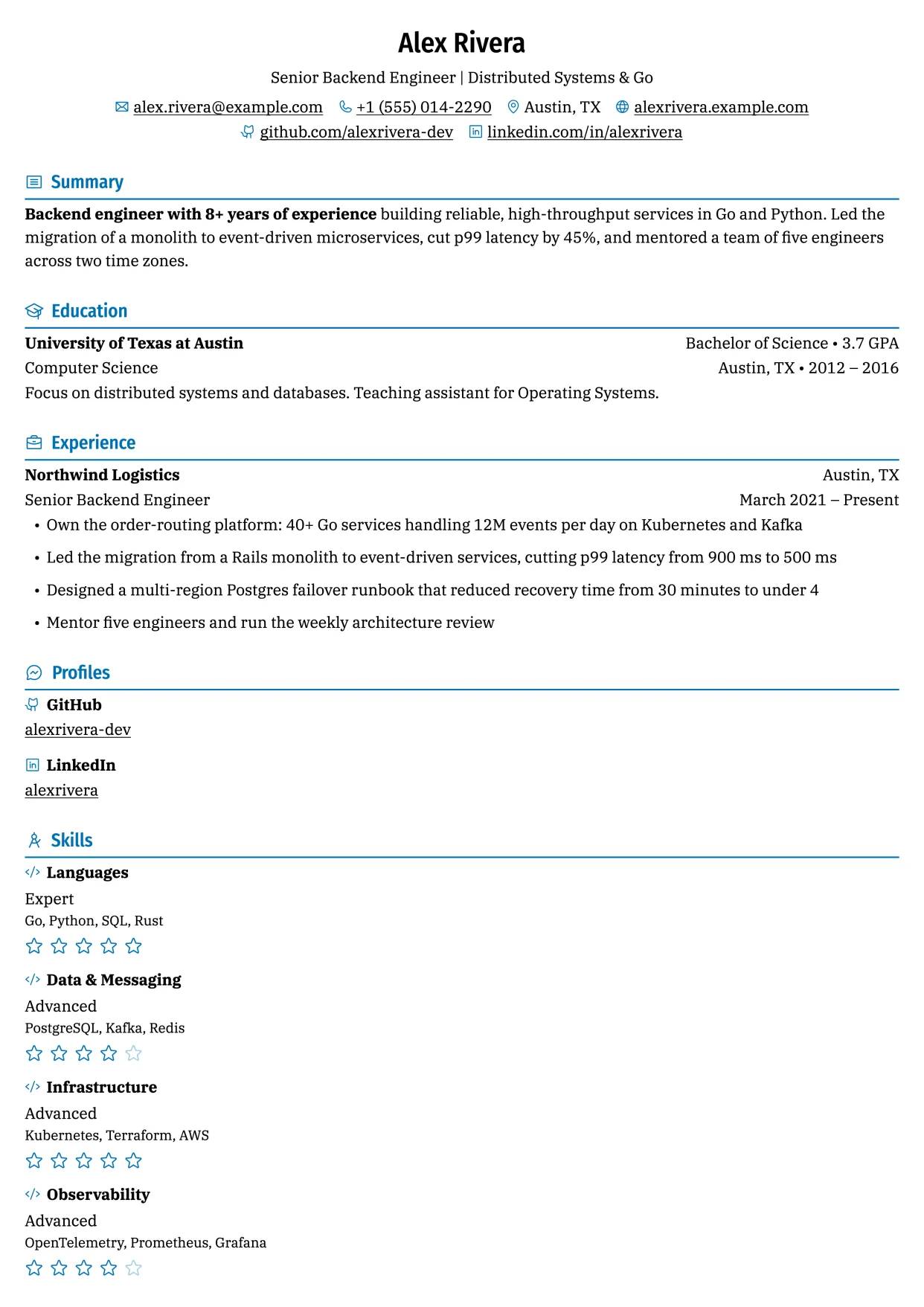
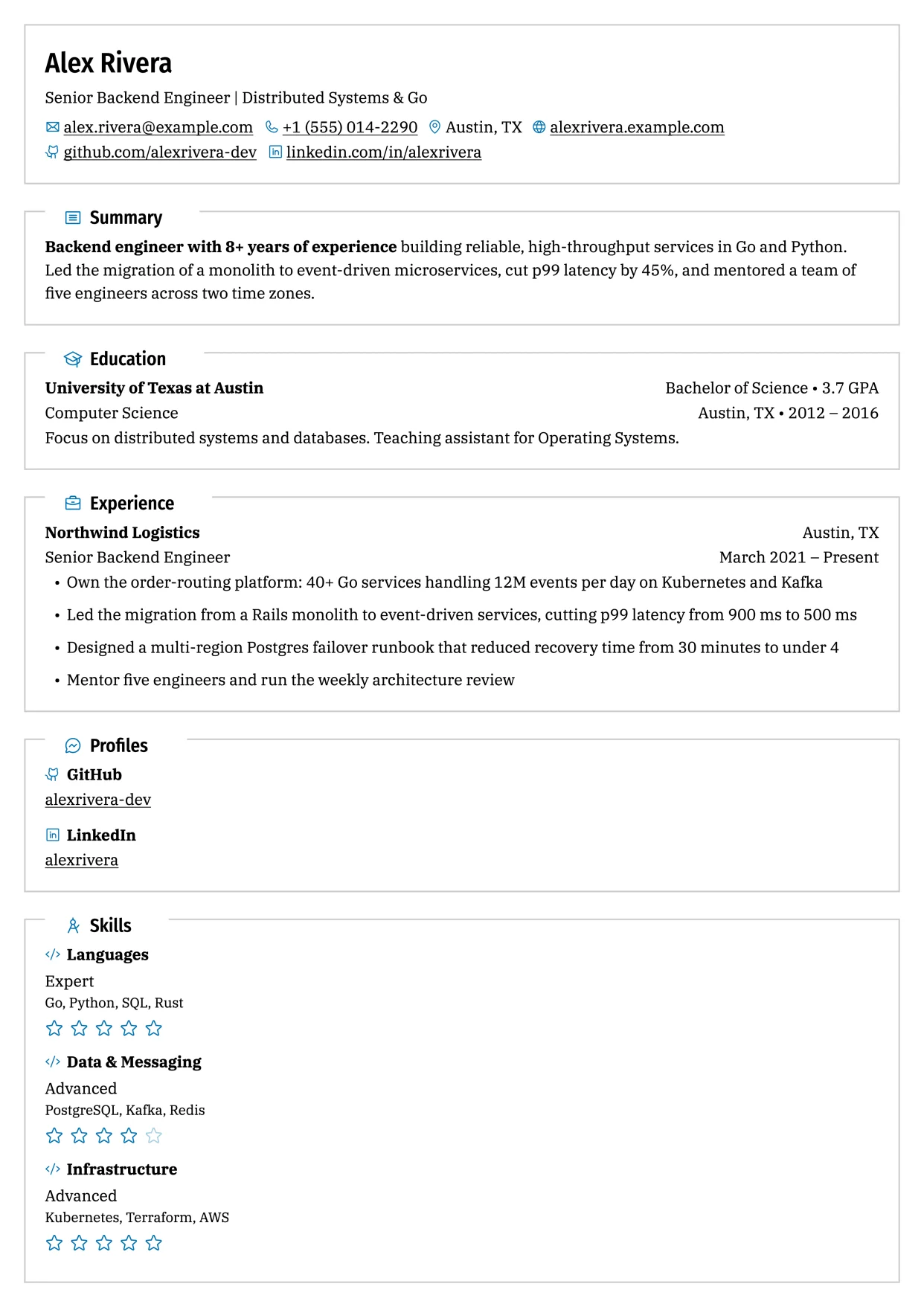
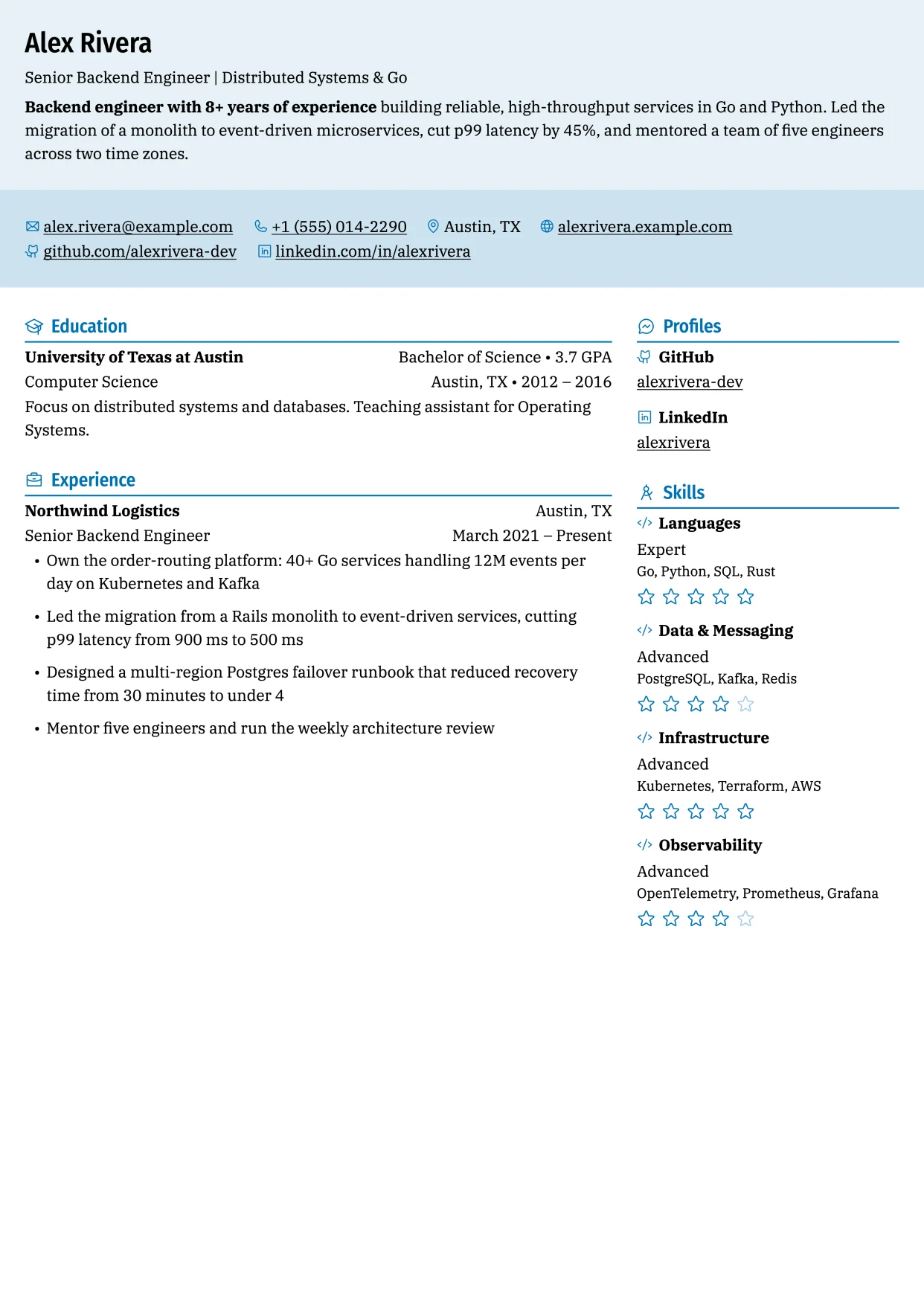
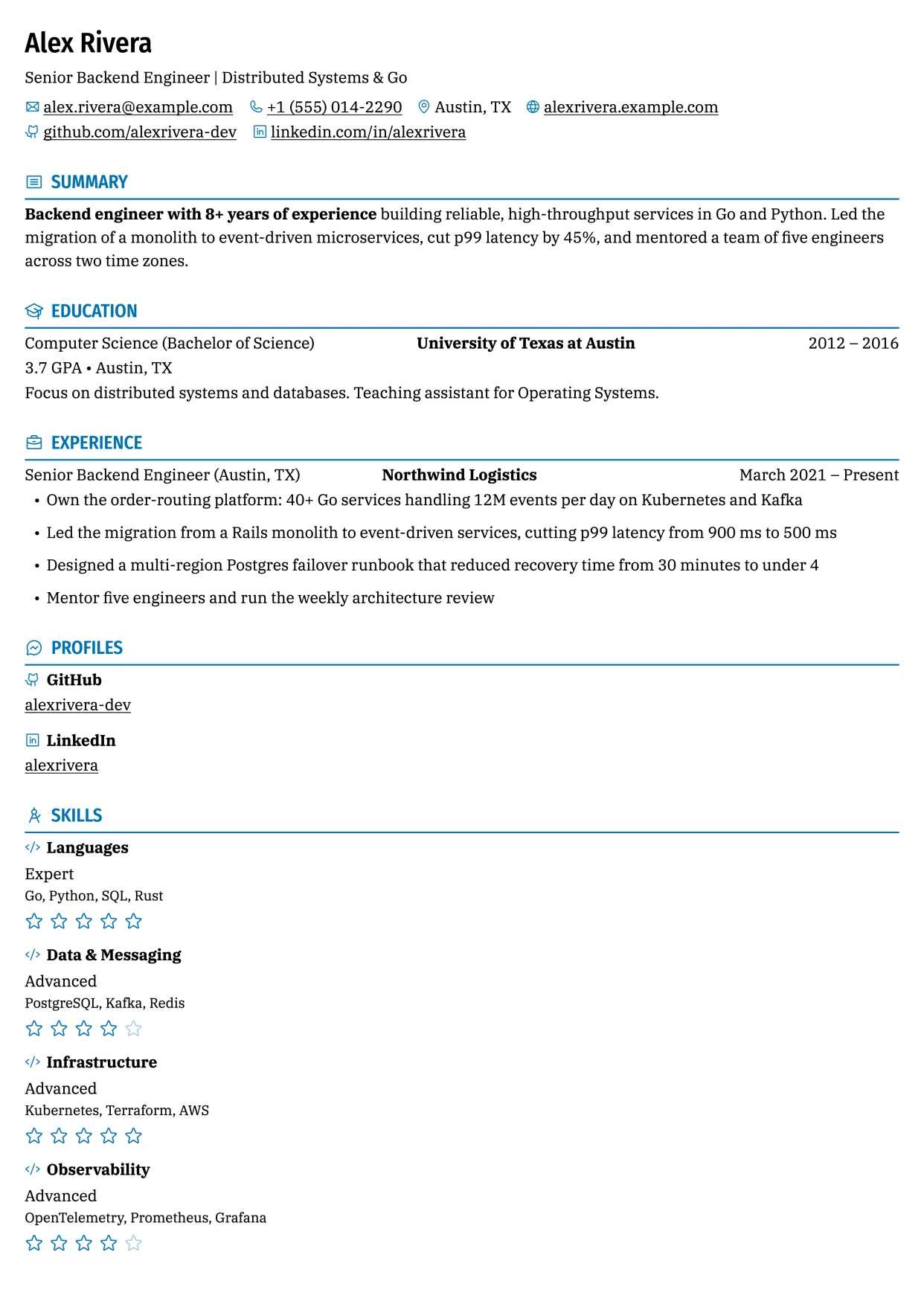
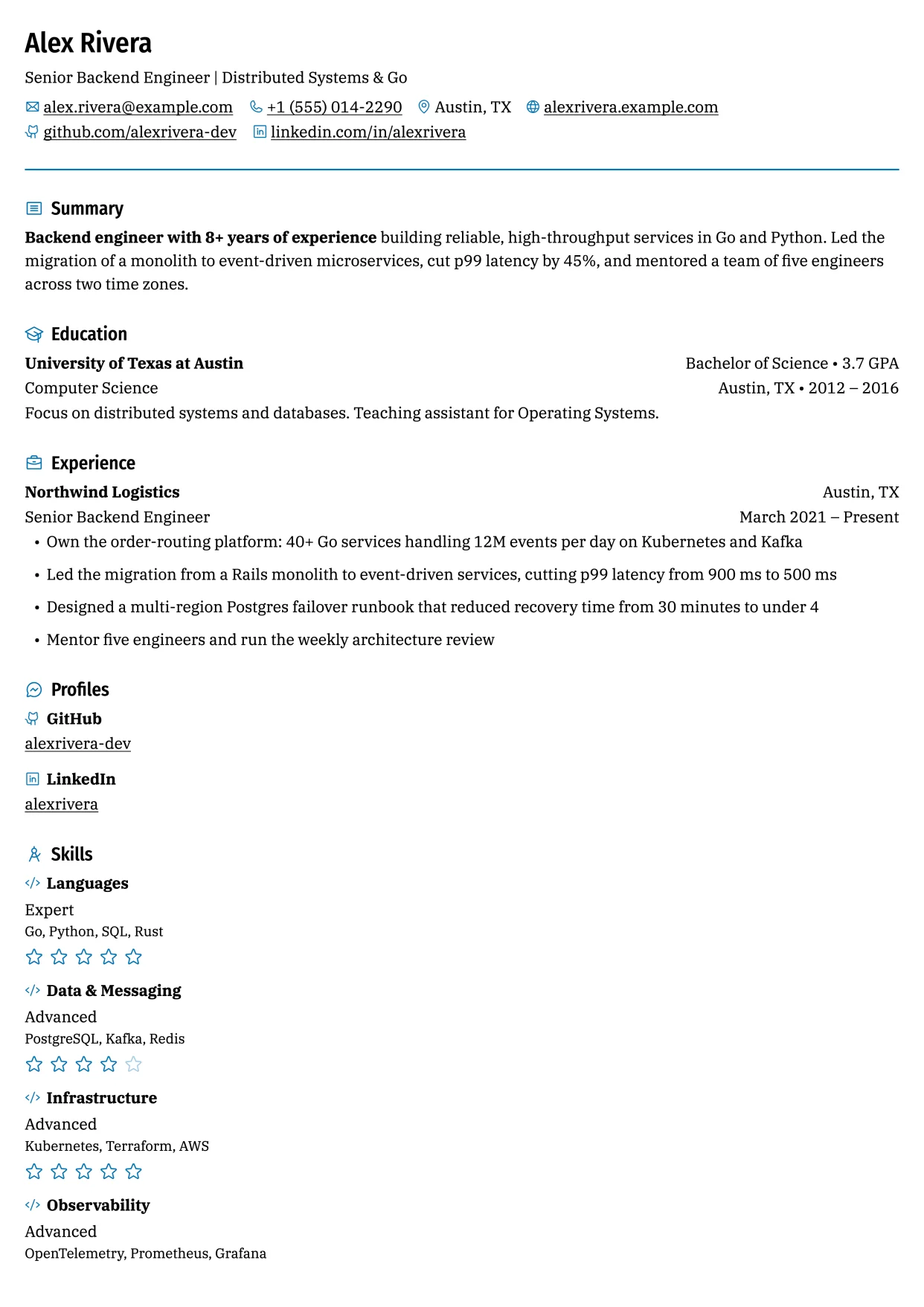
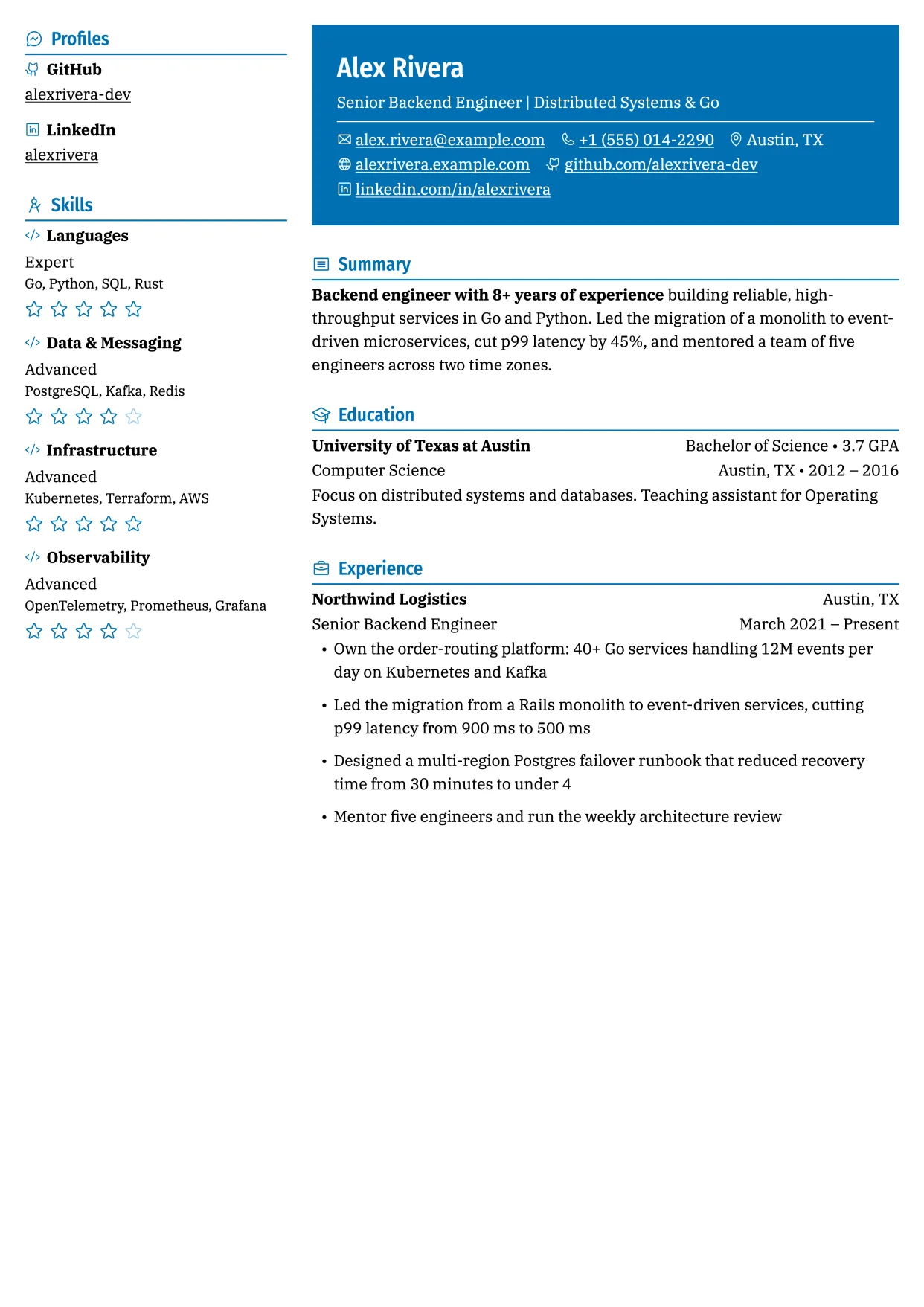
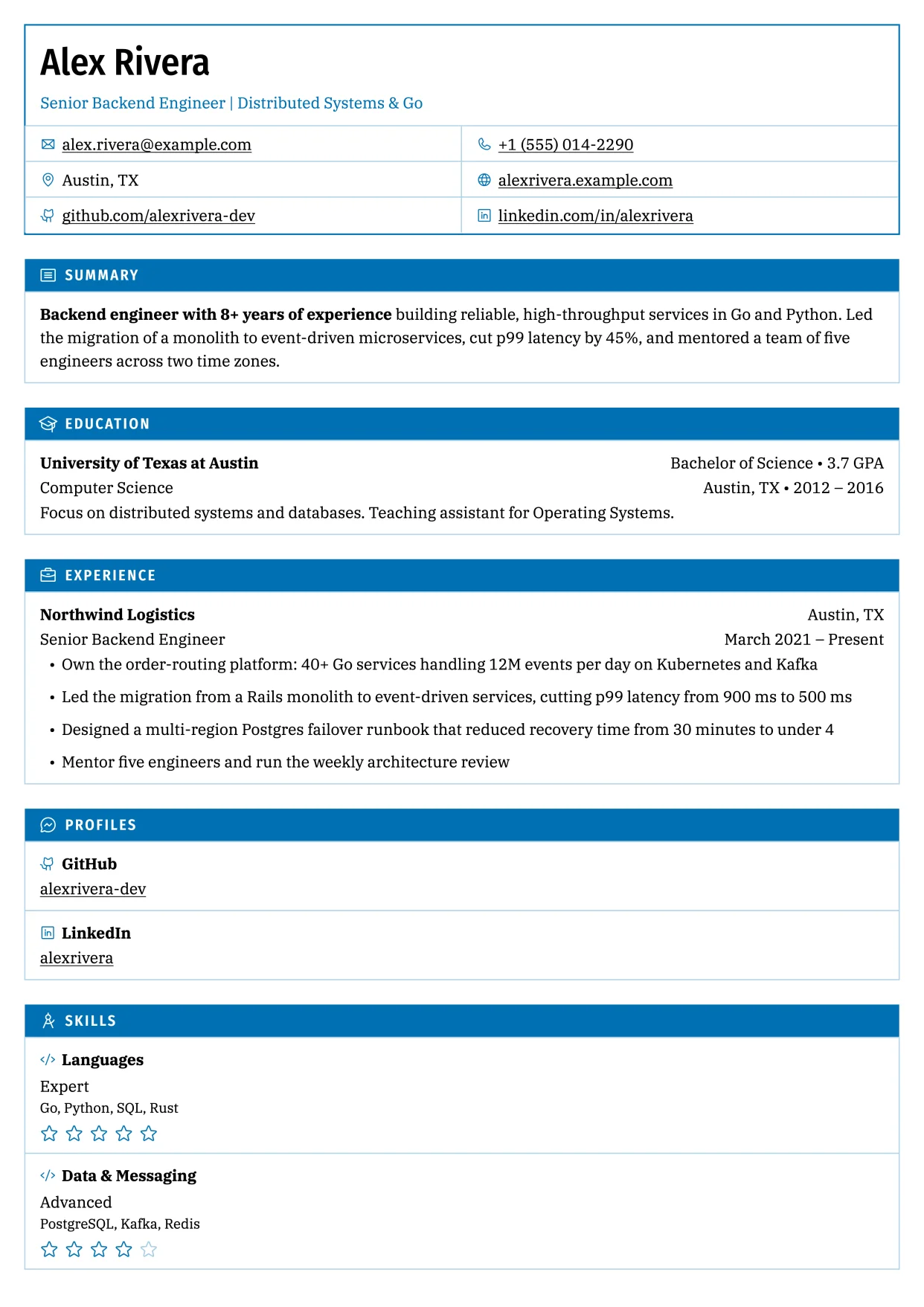
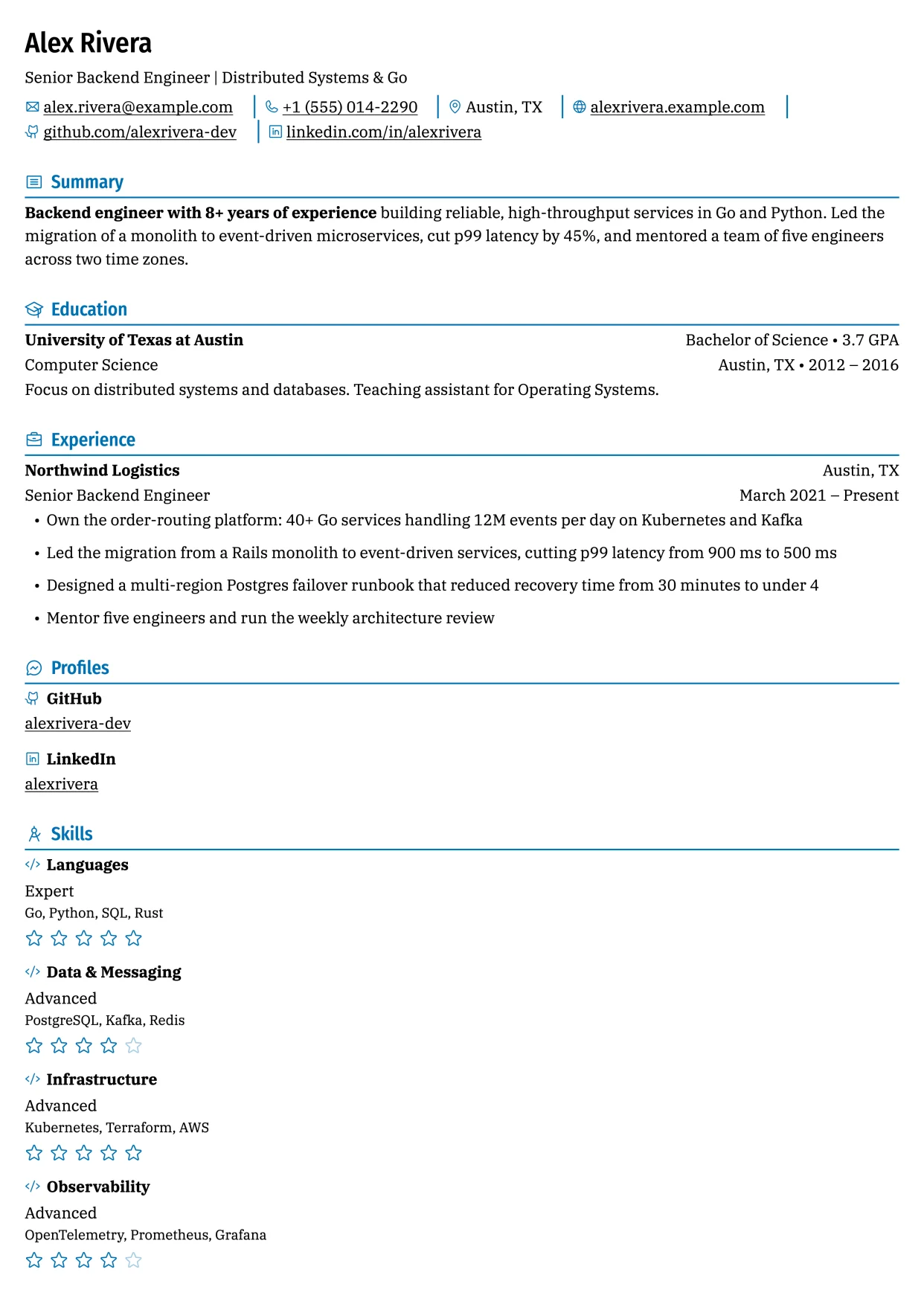
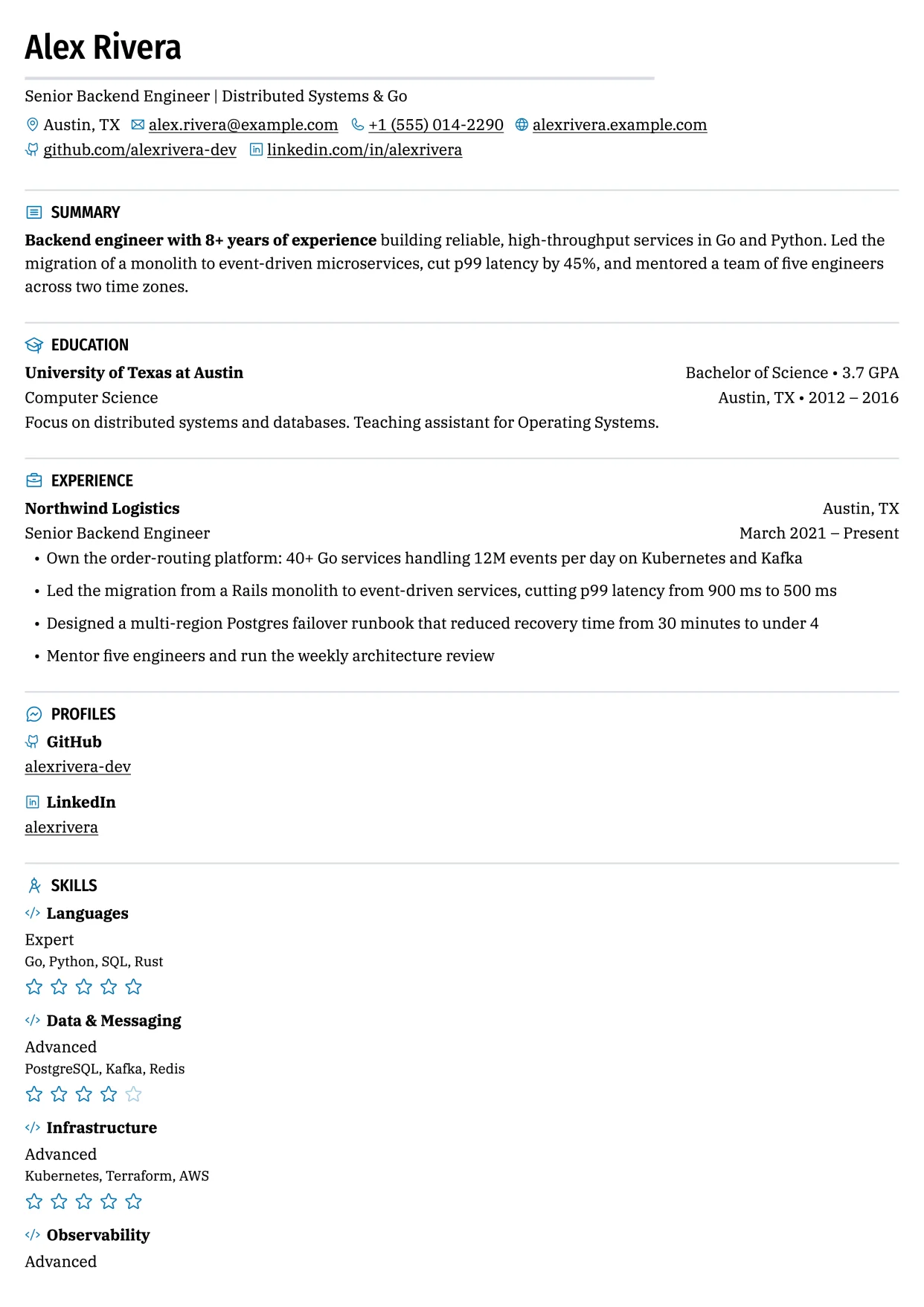
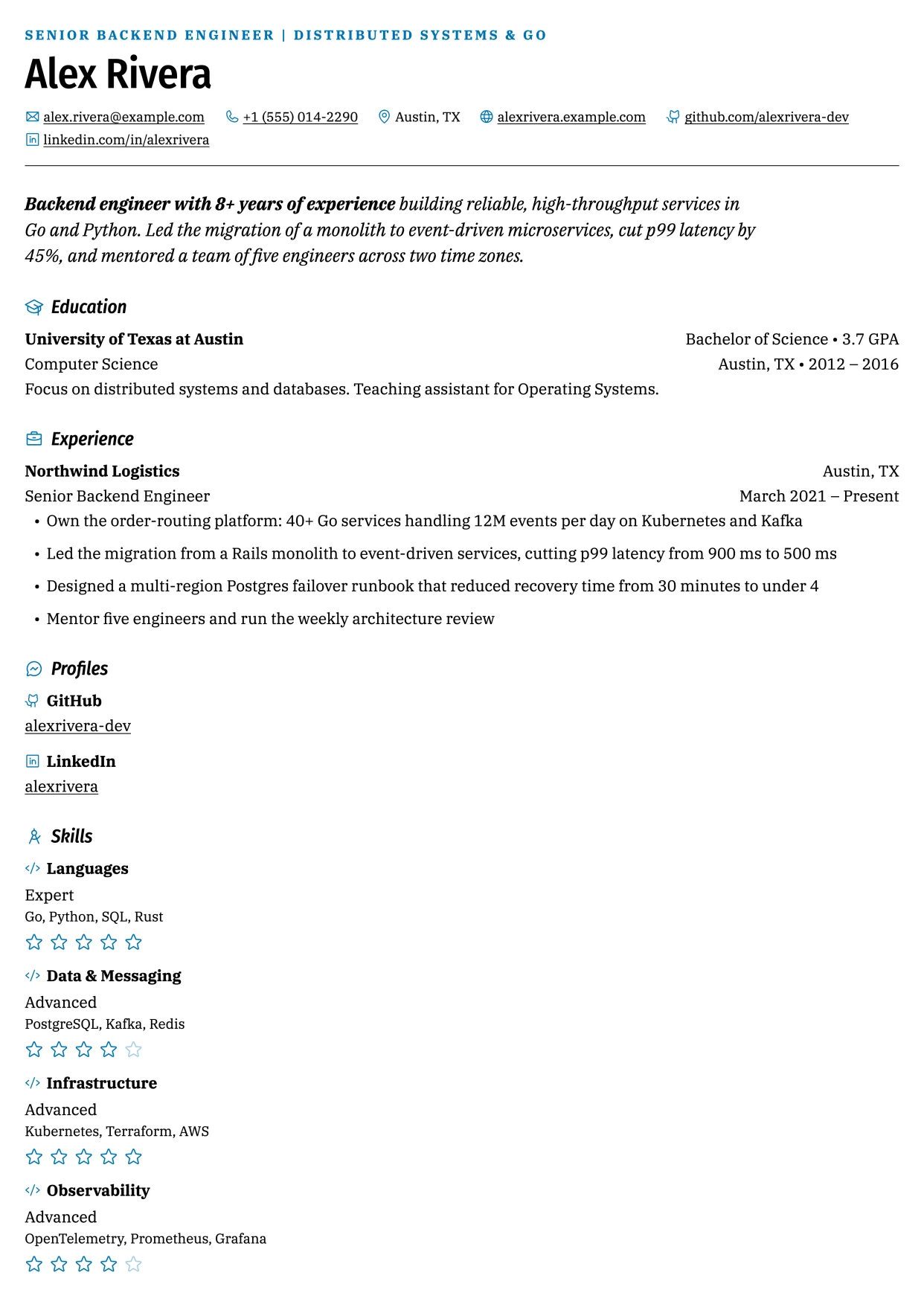
All templates support the same sections and features. They differ only in how they arrange your information. The images below use the same resume in each template.
| Template | Columns | ATS-safe | Sidebar side |
| --------- | ------- | -------- | ------------ |
| Azurill | Two | No | Left |
| Bronzor | One | Yes | — |
| Chikorita | Two | No | Right |
| Ditgar | Two | No | Left |
| Ditto | Two | No | Left |
| Gengar | Two | No | Left |
| Glalie | Two | No | Left |
| Kakuna | One | Yes | — |
| Lapras | One | Yes | — |
| Leafish | Two | No | Right |
| Meowth | One | Yes | — |
| Onyx | One | Yes | — |
| Pikachu | Two | No | Left |
| Porygon | One | Yes | — |
| Rhyhorn | One | Yes | — |
| Scizor | One | Yes | — |
| Smeargle | One | Yes | — |
In a one-column template, sections you placed in the sidebar print after the main sections instead of beside them. Bronzor prints them as labelled rows. On two-column templates you can move the sidebar to the other side; see [Arranging the layout](/docs/design/arranging-the-layout).
## Tips for choosing [#tips-for-choosing]
- **Applying through job portals?** Start with the **ATS-safe** filter. Two-column layouts can be read out of order by applicant tracking systems, and Check mode warns you when sidebar sections might be affected. See [Checking your resume](/docs/checking/checking-your-resume).
- **Lots of experience?** Compare how full each thumbnail's first page looks. After you apply a template, the page count in the zoom bar at the bottom of the page tells you the total.
- **Judge with real content.** Because the gallery draws your own resume, fill in your details first and then pick.
## Reset the design settings [#reset-the-design-settings]
If you have changed a lot of design settings and want a clean slate, open **Advanced** at the bottom of the Design panel and select **Reset design defaults**. This resets fonts, text size, line height, colors, level style, sidebar width, margins, spacing and the icon and underline switches. Your template, paper size, language, date format, section placement and custom CSS stay as they are. A message offers **Undo**.
The reset doesn't depend on the template: every template goes back to the same standard settings (IBM Plex Serif at 10 pt, a red accent, circle levels and hidden section icons). Pick a font pairing and accent color again afterwards if you want a different starting point.
If Design's controls are greyed out, the resume is locked. Open the document name menu at the top left and select
**Unlock editing**.
## Related guides [#related-guides]
Pick a font pairing, text size and density.
Set the accent color and check it reads well.
Move the sidebar, change its width and split sections across pages.
Keep your resume to the number of pages you planned.
On a phone or tablet, press and hold a thumbnail to preview it, then tap it to apply it. On phones, Design opens as a
sheet over the lower half of the page and the templates scroll sideways in a strip.
## The 17 templates [#the-17-templates]
All templates support the same sections and features. They differ only in how they arrange your information. The images below use the same resume in each template.
| Template | Columns | ATS-safe | Sidebar side |
| --------- | ------- | -------- | ------------ |
| Azurill | Two | No | Left |
| Bronzor | One | Yes | — |
| Chikorita | Two | No | Right |
| Ditgar | Two | No | Left |
| Ditto | Two | No | Left |
| Gengar | Two | No | Left |
| Glalie | Two | No | Left |
| Kakuna | One | Yes | — |
| Lapras | One | Yes | — |
| Leafish | Two | No | Right |
| Meowth | One | Yes | — |
| Onyx | One | Yes | — |
| Pikachu | Two | No | Left |
| Porygon | One | Yes | — |
| Rhyhorn | One | Yes | — |
| Scizor | One | Yes | — |
| Smeargle | One | Yes | — |
In a one-column template, sections you placed in the sidebar print after the main sections instead of beside them. Bronzor prints them as labelled rows. On two-column templates you can move the sidebar to the other side; see [Arranging the layout](/docs/design/arranging-the-layout).
## Tips for choosing [#tips-for-choosing]
- **Applying through job portals?** Start with the **ATS-safe** filter. Two-column layouts can be read out of order by applicant tracking systems, and Check mode warns you when sidebar sections might be affected. See [Checking your resume](/docs/checking/checking-your-resume).
- **Lots of experience?** Compare how full each thumbnail's first page looks. After you apply a template, the page count in the zoom bar at the bottom of the page tells you the total.
- **Judge with real content.** Because the gallery draws your own resume, fill in your details first and then pick.
## Reset the design settings [#reset-the-design-settings]
If you have changed a lot of design settings and want a clean slate, open **Advanced** at the bottom of the Design panel and select **Reset design defaults**. This resets fonts, text size, line height, colors, level style, sidebar width, margins, spacing and the icon and underline switches. Your template, paper size, language, date format, section placement and custom CSS stay as they are. A message offers **Undo**.
The reset doesn't depend on the template: every template goes back to the same standard settings (IBM Plex Serif at 10 pt, a red accent, circle levels and hidden section icons). Pick a font pairing and accent color again afterwards if you want a different starting point.
If Design's controls are greyed out, the resume is locked. Open the document name menu at the top left and select
**Unlock editing**.
## Related guides [#related-guides]
Pick a font pairing, text size and density.
Set the accent color and check it reads well.
Move the sidebar, change its width and split sections across pages.
Keep your resume to the number of pages you planned.